
Introduction
Access to clean water has become a basic human right; the reality is that many aquatic ecosystems around the globe are continuously contaminated with industrial effluents, agricultural runoff, pharmaceutical waste, and pathogens. Chemical substances such as hazardous organic dyes, antibiotics, and heavy metals are some of the pollutants entering water bodies. Some of the conventional water treatment methods like coagulation-flocculation, chlorination, membrane filtration, and biological treatment are often not very effective in totally mineralizing durable organic pollutants and emerging micro-pollutants. Photocatalysis by semiconductors, which use photons from solar or visible light to produce highly reactive radicals that are capable of oxidizing any organic molecule, can be an attractive alternative or even standalone solution.
Although titanium dioxide (TiO) has been the most popular material for photocatalysts due to its chemical stability and non-toxicity, it can only absorb UV light because of its wide bandgap (∼3.2 eV for the anatase phase). That means only less than 5% of the terrestrial solar spectrum can be utilized for solar energy. A lot of work has been done to modify the bandgap, decorating with noble metals, constructing heterojunctions, and integrating co-catalysts to both extend the photoresponse of TiO into the visible region and to prevent the rapid recombination of electrons and holes.
Considering these, MXenes have been recognized as groundbreaking co-catalysts and photocatalyst materials since the discovery of TiC by Naguib et al. (1). They possess a remarkable level of metallic conductivity (∼610 S m for TiCT), many surface terminations (OH, =O, F), a high level of hydrophilicity, a large specific surface area, and an electronic structure that can be changed. Apart from these qualities, their metallic aspect makes them excellent candidates for photocatalyst combinations (2, 3). Currently, the number of MXene compositions synthesized is around 40, with many more theoretically predicted (3, 4). This short review gives a brief introduction to MXene synthesis, photocatalytic reactions, and the top recent improvements in the use of MXenes for water treatment. It also offers a look forward to challenges that still need to be addressed and directions for future research.
Structure and general properties of MXenes
MXenes are produced by exfoliating layered ternary carbide and nitride MAX phases (MAX, where M stands for an early transition metal, A is an A-group element, usually aluminum, and X is carbon and/or nitrogen) chemically and selectively removing the A layer (1). The 2D sheets formed have the basic formula MXT, where n can be 1, 2, or 3 and T represents surface functional groups (OH, =O, F) generated during the wet etching process (2). The most thoroughly researched one, TiCT, serves as an example of all the common structural features of the entire MXene family: a hexagonal array of titanium carbide layers with termination groups on both side planes. Figure 1 shows the elements in the periodic table of components regarding MAX phases.
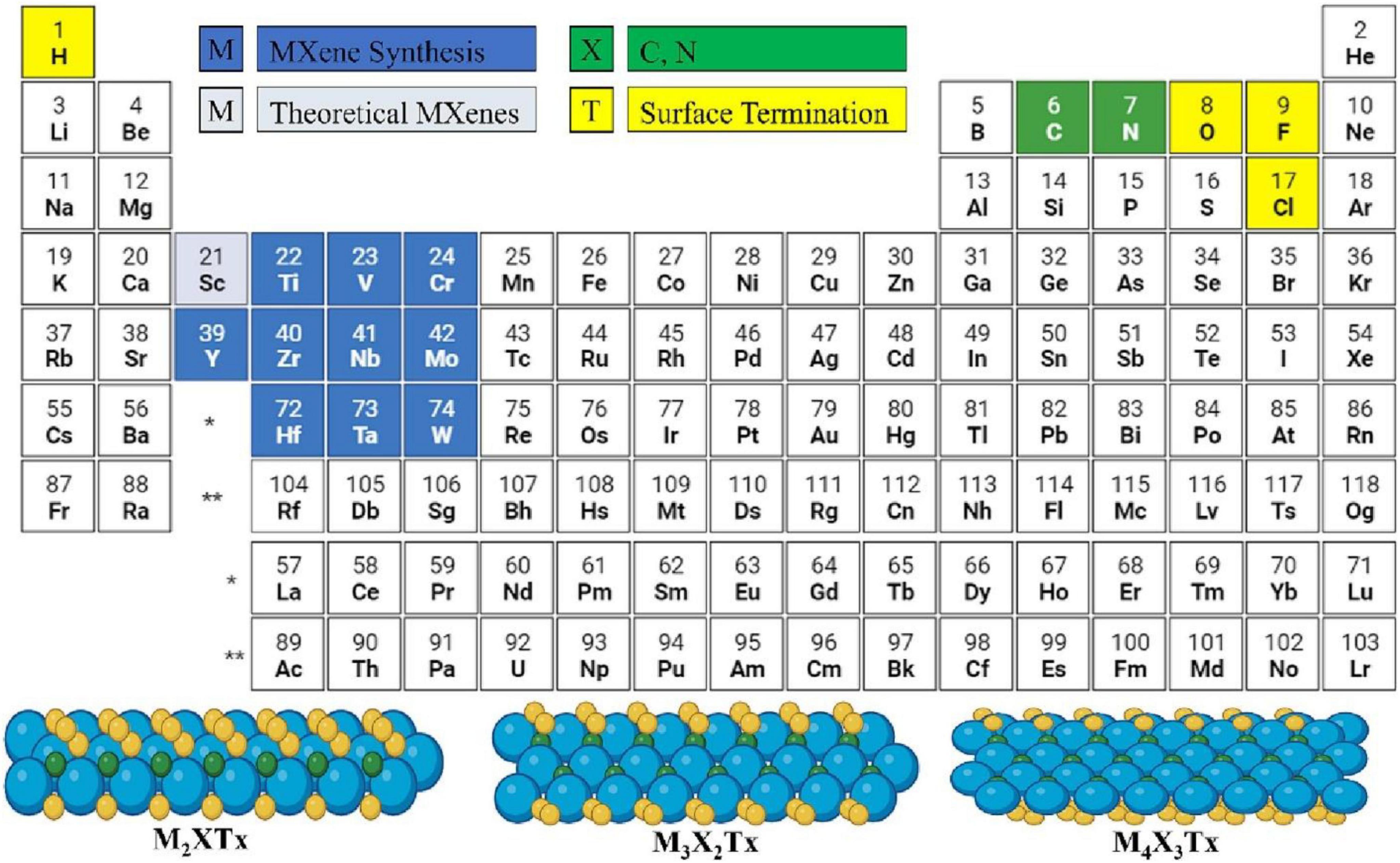
Figure 1. Synthesis of MXene utilizing multiple elements. (Selvaraj et al.) (5) Copyrights 2024, Elsevier Pvt. Ltd. License No. 6301150719365.
Some of the main physicochemical features of MXenes that make them good for photocatalysis: (i) electrical conductivity of metals level, which allows electrons to move very fast and also hinders electron-hole recombination; (ii) a work function (∼4.0 eV for TiCT) easily adjustable by changes in surface chemistry This way enabling the formation of a Schottky barrier at the semiconductor interface; (iii) a very large cross-section of optical absorption extending all the way from UV, visible, and near-infrared (NIR) regions because of surface plasmon resonances and inter-band transitions; and (iv) plenty of hydrophilic surface terminations facilitating pollutant adsorption and electrostatic interactions with charged contaminants. To further elaborate on MXenes’ properties across different families and their huge potential application areas, including energy storage, EMI shielding, electrocatalysis, and environmental remediation (3).
Synthesis routes
HF etching (first-generation method)
The first production of TiCT consisted of putting TiAlC MAX phase powder into a concentrated hydrofluoric acid (HF) solution at room temperature. Aluminum layers are selectively dissolved to only leave accordion-like multilayer MXene flakes (1). Despite its simplicity, concentrated HF poses severe safety hazards, introduces a high density of fluorine surface terminations, and leaves residual aluminum fluoride impurities. Subsequent delamination via intercalation with dimethyl sulfoxide (DMSO) or tetrabutylammonium hydroxide (TBAOH) yields single- or few-layer nanosheets amenable to film formation and composite fabrication (6).
In situ HF generation: MILD method
The minimally intensive layer delamination (MILD) approach generates HF in situ from lithium fluoride (LiF) and hydrochloric acid (HCl), enabling simultaneous etching and Li-ion intercalation and producing clay-like Ti3C2Tx with fewer defects and superior delamination (6). The MILD route is now widely adopted owing to its improved safety profile relative to concentrated HF and the higher quality of the resulting colloidal dispersions. Murali et al. (4) presented a comprehensive survey of these and emerging synthesis pathways, including alkali-assisted hydrothermal etching and fluoride-free routes using NaOH, which eliminate fluorine terminations and reduce cytotoxicity concerns.
Fluoride-free and molten-salt routes
As people have become more conscious of the possible toxic effects of fluorine, researchers have been trying to find ways of synthesizing it without fluoride. First, the NaOH hydrothermal process was carried out, and then the oxidation step in HSO resulted in the formation of well-crystallized TiCT with mostly hydroxyl and oxygen terminations, which are ideal for the photocatalytic applications that heavily rely on the generation of reactive oxygen species (ROS). Two other new scalable and fluoride-free options that are being discussed more and more are Lewis acid molten-salt and electrochemical etching (4).
Photocatalytic mechanisms
Role of MXenes as co-catalysts: Schottky junction
When TiCT (metallic) is combined with a semiconductor photocatalyst (e.g., TiO ZnO g-CN, CdS), a Schottky barrier is formed at the metal-semiconductor interface due to the matching of the Fermi level of MXene (work function 4 eV) being positioned lower than the conduction band of the semiconductor. As soon as the photoexcitation takes place, the photogenerated electrons are transferred from the conduction band of the semiconductor through the Schottky barrier into the MXene, which serves as an electron reservoir, whereas the holes are left on the semiconductor. This electron flow in one direction only greatly lowers the rate of electron-hole recombination and keeps carriers longer, which is then directly converted into a higher photocatalytic yield.
Using ZnO@TiC Schottky junctions as a model, Liu et al. showed 94.84% methylene blue (MB) degradation under simulated solar light, a 47-fold enhancement over bare ZnO, and explained the enhancement by the efficient hole-electron separation at the Schottky interface (7). In the same way, TiO/TiCT composites prepared by Zhang et al. through hydrothermal synthesis at low temperature showed MB removal efficiencies of 96.44% under UV and 40.19% under visible light, which corresponds to an 8.26-fold increase over pure TiO under visible light irradiation (8).
Heterojunction engineering
Beyond Schottky junctions, MXene-based composites adopt Z-scheme and S-scheme heterojunction configurations with carefully selected semiconductor partners. In Z-scheme systems, the photogenerated electrons of the oxidation-side semiconductor recombine with holes of the reduction-side semiconductor (facilitated by MXene as the electron mediator), preserving the strong redox potentials of both semiconductors. In S-scheme (step-scheme) heterojunctions, built-in electric fields at the interface guide charge migration so that electrons from the semiconductor with the higher reduction potential are retained, enabling both strong oxidation and reduction capabilities simultaneously.
g-C3N4 is among the most frequently paired semiconductors with Ti3C2Tx owing to its visible-light-active bandgap (∼2.7 eV) and nitrogen-rich chemistry. Li et al. self-assembled a 2D/2D Ti3C2/g-C3N4 heterojunction that achieved 93.93% tetracycline (TC) degradation in 60 min under visible light, far exceeding the activity of either component alone (9). The formation of Ti-N bonds at the interface was identified as key to broadening visible-light absorption and lowering the effective bandgap through valence-band repositioning (9).
Reactive oxygen species generation
Regardless of the specific heterojunction architecture, photocatalytic pollutant degradation by MXene-based composites fundamentally proceeds through ROS. When exposed to light, holes (h) oxidize water molecules or hydroxyl ions adsorbed on surfaces to create hydroxyl radicals (OH), the strongest oxidizing agent, E = +2.80 V vs. NHE, while electrons that are transferred to O generate superoxide radicals (O), which in turn dismutate to HO and further OH radicals. The abundance of oxygen and hydroxyl surface terminations of MXene offers sites that are not only catalytically active but also efficient in transforming these species. Radical-trapping experiments with isopropanol (OH scavenger), p-benzoquinone (O scavenger), and ammonium oxalate (h scavenger) mainly point to OH and O as the leading oxidizing species in MXene-based photocatalytic systems (4, 9).
Photocatalytic water purification applications
Degradation of organic dyes
Industrial textile and paper effluents containing synthetic dyes like MB, rhodamine B (RhB), and methyl orange (MO) are the main focus of photocatalytic treatment since these dyes are not only highly colored and toxic but also very difficult to be biodegraded (Figure 2). TiO2/Ti3C2Tx composites have consistently demonstrated superior dye removal compared to pristine TiO2. Othman et al. fabricated AgNPs/TiO2/Ti3C2Tx ternary composites via one-pot hydrothermal synthesis and showed synergistic enhancement of MB and RhB degradation under both UV and solar light, attributing the gain to the surface plasmon resonance of Ag nanoparticles extending visible-light absorption alongside efficient electron extraction by MXene (10).
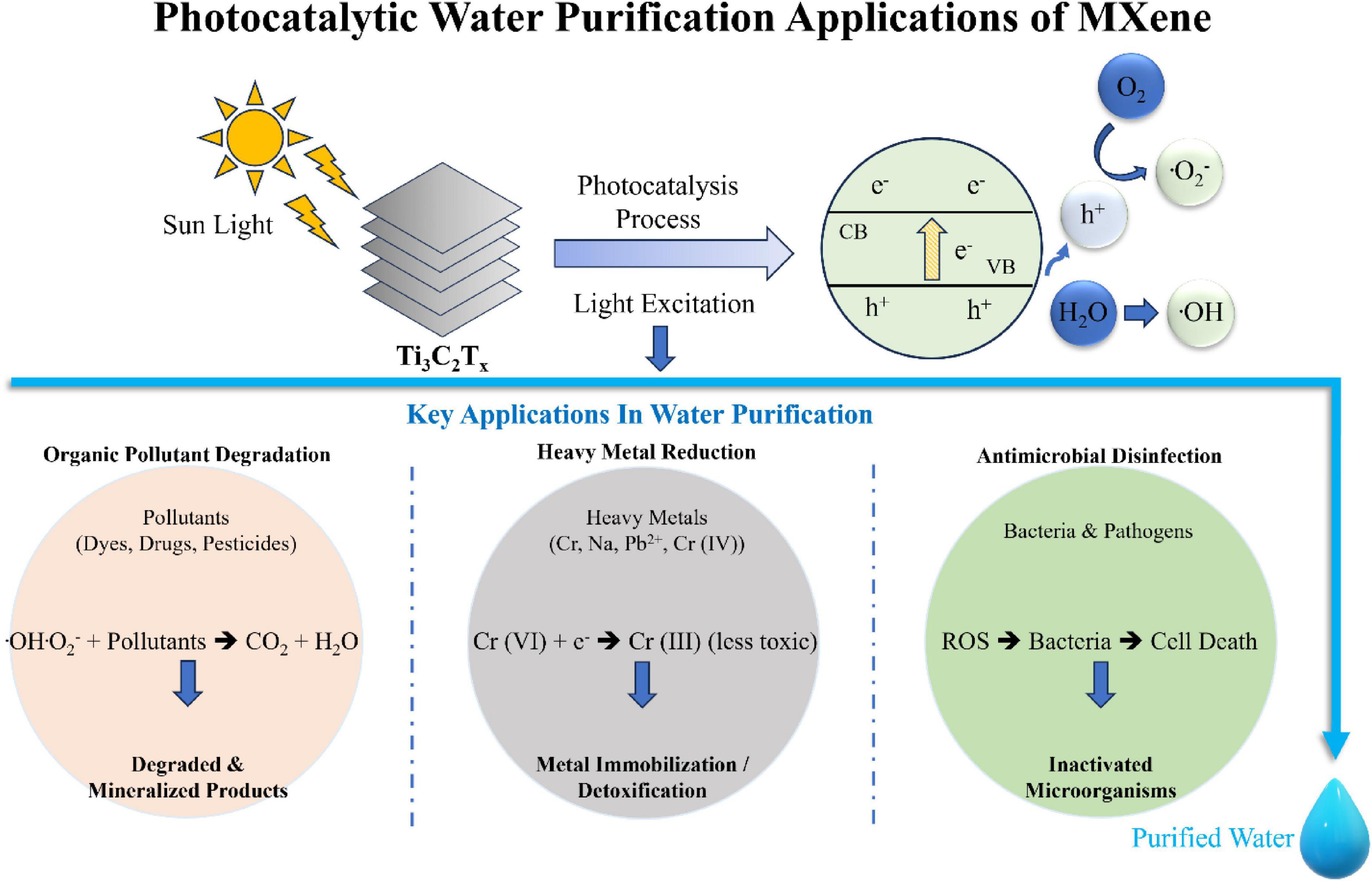
Figure 2. Schematic representation of photocatalytic water purification applications of MXene.
RhB degradation reaching 97% in 40 min has been reported for TiO2@Ti3C2Tx composites where the lower Fermi level of Ti3C2Tx relative to TiO2 facilitates thermodynamically favorable electron migration from the oxide into the MXene (11). The high adsorption capacity of Ti3C2Tx for cationic dyes—enabled by its negatively charged surface—further augments photocatalytic performance by pre-concentrating pollutants at the photocatalytically active surface.
Removal of pharmaceutical pollutants
Antibiotics discharged from hospitals, pharmaceutical manufacturing, and aquaculture operations are among the most problematic emerging contaminants given their role in driving antibiotic resistance. TC has received particular attention. The 2D Ti3C2/g-C3N4 heterojunction of Li et al. achieved 93.93% TC removal under visible light within 60 min, with superoxide radicals identified as the primary reactive species (9). The study by Esfandiar et al. showed that ternary photocatalysts Fe2O3-SiO2/MXene could remove 98% of TC under the best conditions, which points to the effectiveness of multicomponent MXene nanoarchitectures (12).
Besides TC, systems based on MXene have been utilized for antibiotics like ciprofloxacin, oxytetracycline, and sulfamethoxazole. The chemistry of MXene surfaces is so flexible that by changing transition metal, surface terminations, and semiconductor partner, one can tailor the composition of MXene to obtain the highest degradation rates for various antibiotic classes. Gu et al. go many miles in explaining and reviewing MXene-based water purification through one of the methods: adsorption, reduction, and photocatalytic oxidation, which leaves no trace of drugs and other pollutants at micro-levels (13).
Photocatalytic reduction of heavy metals
Hexavalent chromium Cr(VI) is a powerful carcinogen, and its timely removal from industrial effluents is highly necessary. Versus the chemical nature of organic pollutants that get converted to harmless products through oxidation, Cr(VI) is detoxified through photocatalytic reduction to the much less toxic and non-mobile Cr(III) form. MXenes, in fact, contribute to the process in two ways: (i) as adsorptive surfaces that intensify Cr(VI) concentration via electrostatic interactions; and (ii) as electron carriers that very effectively transport photogenerated electrons for the reduction of CrO to Cr.
Razafintsalama et al. have illustrated the use of BiVO-decorated TiCT MXene photocatalysts that can achieve as high as 96.39% Cr(VI) photoreduction, wherein the decreased bandgap energy (2.335 eV) of the BiVO-MXene composite leads to enhanced visible light harvesting, and the Schottky junction helps in charge separation (14). In a different work, the delaminated TiCT-assisted adsorption photocatalysis resulted in a highly efficient Cr(VI) removal under UV light, and the mechanism was basically the combination of adsorption on the negatively charged MXene surfaces and photoreduction (15).
Photocatalytic disinfection
Pathogenic microorganisms, including antibiotic-resistant bacteria, have become a major threat to the safety of drinking water. MXene-based photocatalysts kill bacteria through several synergistic mechanisms: (i) Producing ROS that cause oxidative damage to membranes, proteins, and nucleic acids; (ii) Physically, the sharp edges of MXene nanosheets disrupt bacterial membranes; and (iii) Electrostatic attraction of the negatively charged MXene surface with the positively charged bacterial membranes at near-neutral pH results in killing on contact.
Wang et al. synthesized TiO/TiCT MXene hybrid photocatalysts for disinfecting airborne Escherichia coli in a continuous-flow polyurethane foam reactor, and obtained 3.4 log-order inactivation under UV254, a result far beyond UV-only treatment, and at the same time showed that the introduction of MXene reduced electron-hole recombination by 30% (16). More importantly, while UV irradiation alone (which damages DNA, thereby enabling photoreactivation) exposed cells to the risk of reactivation, photocatalytic treatment led to irreversible physical membrane damage without reactivation, pointing to a more complete disinfection path (16).
Challenges and limitations
Even though MXenes are highly promising photocatalysts, they have both material and practical challenges that need to be solved first for their wide-scale deployment.
Oxidative Instability: TiCT in aqueous solutions and even in air gets oxidized gradually to form amorphous TiO and titanium oxyfluoride phases on the surface of the nanosheet. A nice trick can be done with partial oxidation to have TiO/TiCT heterojunctions formed in a single step, but uncontrolled oxidation leads to degradation of conductivity and photocatalytic activity over time. To keep pristine MXene colloidal dispersions, one would have to store them in an inert atmosphere and refrigerated conditions, which is an additional hurdle to practical deployment (4).
Fluorine contamination and toxicity: MXenes derived from HF have fluorine terminations on their surfaces, which might be released into the cleaned water as well as being cytotoxic to aquatic life and mammalian cells. Besides that, it is only fair that the development of non-fluoride synthesis methods is in fact a must for making safe water treatment environments from the point of view of fluorides (4, 13).
Restacking and Agglomeration: Like graphene oxide and other 2D nanomaterials, MXene nanosheets have a strong natural inclination to stick together through van der Waals interactions and hydrogen bonding, which dramatically reduces the surface area that is accessible and the photocatalytic active sites. Efforts to solve this problem have included heteroatom intercalation, 3D aerogel/foam architectures, and anchoring on porous supports (4, 13).
Scalability: Given the type of MXene synthesis, mainly the MILD-route-delamination, you get somewhat low yields, and this also needs multi-step processing. Moving from laboratory-scale photocatalytic experiments to pilot- and industrial-scale water treatment systems would need strong immobilization strategies, photoreactor engineering, and testing under realistic wastewater with competing ions and containing natural organic matter.
Future prospects
The use of MXenes in photocatalytic water purification is a rapidly changing field. There are several aspects that seem most of all promising. One, synthesizing MXenes other than Ti (e.g., NbC, VC, MoC, and multi-transition-metal ordered MXenes) with customized bandgaps and work functions would broaden the spectral response and redox flexibility accessible to system designers. Two, high-entropy MXenes, which are compositions containing four or more transition metals in a single lattice, represent a new area with great potential offering additional degrees of freedom for the optimization of catalytic active sites (3, 4).
Thirdly, the combination of MXenes in photocatalytic membranes that are capable of performing size exclusion, adsorption, and photocatalytic oxidation simultaneously in one device is highly attractive for off-grid water treatment. g-CN@MXene/polyethersulfone composite membranes have exhibited dye and antibiotic removal simultaneously (13). Fourth, employing machine learning to cleverly design MXene surface chemistries and composite pairings suggests the possibility of vastly accelerating the discovery of excellent photocatalytic systems that are inaccessible by conventional methods of trial and error.
Lastly, life-cycle assessment (LCA) and ecotoxicological studies that track the environmental fate and the biological effects on organisms of MXene nanosheets in treated water and in the natural environment are very much needed to support strategies for their safe use. Green synthesis that relies on biomass-derived carbon precursors and etching agents that are abundant in nature and the development of stable and recyclable MXene-based photocatalytic composites will matter a lot in establishing whether this technology is feasible in practice and economically.
Conclusions
MXenes are one of the most versatile and efficient platforms for photocatalytic water purification. The combination of high metallic conductivity, readily changeable surface chemistry, broad light absorption, and great electron transport properties makes them perfect as co-catalysts and composite partners of semiconductor photocatalysts. Various applications like organic dye degradation, antibiotic mineralization, heavy-metal photoreduction, and microbial disinfection have all witnessed Much higher performance levels than conventional photocatalysts when they were equipped with MXenes. The principal mechanistic discoveries—mostly the Schottky junction engineering and Z/S-scheme heterojunction construction—supply next-generation material development strategies. Overcoming issues of oxidative instability, fluorine toxicity, restacking, and scaling up production by fluoride-free synthesis, green chemistry, and judicious composite engineering will be key to turning laboratory potential into real environmental solutions. This area of research is expected to make an enormous contribution to global water security over the next decade.
Ethics statement
Not applicable.
Funding
The author declares that financial support was not received for this work and/or its publication.
Conflict of interest
The author declares that the research was conducted in the absence of any commercial or financial relationships that could be construed as a potential conflict of interest.
References
1. Naguib M, Kurtoglu M, Presser V, Lu J, Niu J, Heon M , et al. Two-dimensional nanocrystals produced by exfoliation of Ti3AlC2. In: MXenes. Jenny Stanford Publishing (2023). p. 15–29.
2. Naguib M, Mochalin VN, Barsoum MW, Gogotsi Y. 25th anniversary article: MXenes: a new family of two-dimensional materials. Adv Mater. (2014) 26(7):992–1005.
3. Anasori B, Lukatskaya MR, Gogotsi Y. 2D metal carbides and nitrides (MXenes) for energy storage. Nat Rev Mater. (2017) 2(2):16098.
4. Murali G, Reddy Modigunta JK, Park YH, Lee JH, Rawal J, Lee SY , et al. A review on MXene synthesis, stability, and photocatalytic applications. ACS Nano. (2022) 16(9):13370–429.
5. Selvaraj S, Chauhan A, Verma R, Vishwanathan K. Multifunctional biomedical applications of MXene-based hydrogels: a review. Inorgan Chem Commun. (2024) 164:112457.
6. Alhabeb M, Maleski K, Anasori B, Lelyukh P, Clark L, Sin S , et al. Guidelines for synthesis and processing of two-dimensional titanium carbide (Ti3C2Tx MXene). Chem Mater. (2017) 29(18):7633–44.
7. Liu M, Li J, Bian R, Wang X, Ji Y, Zhang X , et al. ZnO@ Ti3C2 MXene interfacial Schottky junction for boosting spatial charge separation in photocatalytic degradation. J Alloys Comp. (2022) 905:164025.
8. Perinelli DR, Mustafa AM, Angeloni S, Sagratini G. Surface and emulsifying properties of raw ethanolic extracts from legumes containing soyasaponins and proteins. Sustain Chem Pharm. (2022) 30:100872.
9. Li C, Kan C, Meng X, Liu M, Shang Q, Yang Y , et al. Self-assembly 2D Ti3C2/g-C3N4 MXene heterojunction for highly efficient photocatalytic degradation of tetracycline in visible wavelength range. Nanomaterials (Basel). (2022) 12(22):4015.
10. Othman Z, Sinopoli A, Mackey HR, Mahmoud KA. Efficient photocatalytic degradation of organic dyes by AgNPs/TiO2/Ti3C2Tx MXene Composites under UV and Solar Light. ACS Omega. (2021) 6(49):33325–38.
11. Ding J, Chen H, Wang X, Fu H, Ma L. Unusual enhanced photoluminescence from highly lattice mismatched ZnO/Cu3N multilayer films. Mater Res Bull. (2017) 96:40–6.
12. Akbari M, Rasouli J, Rasouli K, Ghaedi S, Mohammadi M, Rajabi H , et al. MXene-based composite photocatalysts for efficient degradation of antibiotics in wastewater. Sci Rep. (2024) 14(1):31498.
13. Gu P, Liu S, Cheng X, Zhang S, Wu C, Wen T , et al. Recent strategies, progress, and prospects of two-dimensional metal carbides (MXenes) materials in wastewater purification: a review. Sci Total Environ. (2024) 912:169533.
14. Razafintsalama AR, Mishra RP, Sahoo MK, Mrinalini M, Sahoo B, Ravelonandro P , et al. Efficient photocatalytic reduction of hexavalent chromium by BiVO4-decorated MXene photocatalysts and their charge carrier dynamics. Langmuir. (2023) 39(36):12725–39.
15. Jamaluddin NS, Alias NH, Samitsu S, Othman NH. Efficient chromium (VI) removal from wastewater by adsorption-assisted photocatalysis using MXene. J Environ Chem Eng. (2022) 10(6):108665.
16. Yu Y, You S, Du J, Zhang P, Dai Y, Liu M , et al. Ti3+-self-doped TiO2 with multiple crystal-phases anchored on acid-pickled ZIF-67-derived Co3O4@ N-doped graphitized-carbon as a durable catalyst for oxygen reduction in alkaline and acid media. Chem Eng J. (2021) 403:126441.
© The Author(s). 2026 Open Access This article is distributed under the terms of the Creative Commons Attribution 4.0 International License (https://creativecommons.org/licenses/by/4.0/), which permits unrestricted use, distribution, and reproduction in any medium, provided you give appropriate credit to the original author(s) and the source, provide a link to the Creative Commons license, and indicate if changes were made.