
Introduction
In recent days, one of the major global health concerns is oral infection, and it affects billions of people across all age groups. The World Health Organization (WHO) reports that oral infection is ranked as the most prevalent health problem worldwide. The overuse of antimicrobial agents develops a multidrug-resistant organism (MDR), and its treatment is highly challenging due to biofilm-mediated pathogen resistance. This determinant indicates the need for development of novel and targeted therapeutic strategies (1). Different common pathogens can cause disrupted, major alterations in the oral environment, such as changes in pH, dietary habits, poor oral hygiene, and the use of orthodontic appliances, which can disrupt this equilibrium and lead to the overgrowth of pathogenic species, infection, and oral health complications (2). Common oral microbes include Enterococcus faecalis (E. faecalis), Staphylococcus aureus (S. aureus), Escherichia coli (E. coli), and Candida albicans (C. albicans) (3, 4). Recent progress has explored the integration of antimicrobial agents into dental materials against the challenges posed by such resilient pathogens. Many studies have focused on incorporating nanoparticles into resin-modified glass ionomer cements, wires, bands, and orthodontic adhesives and elastomerics, as well as coating orthodontic brackets (5).
Many studies have demonstrated that nanoparticles can specifically inhibit the formation and proliferation of microbial biofilms (5). Metal-based nanoparticles have developed as potent antimicrobial agents due to their unique physicochemical properties and higher reactivity (6). Zinc oxide nanoparticles (ZnO NPs) are widely investigated for their antimicrobial properties, which represent a key reason for their growing application. It has various properties like thermal stability, robustness, chemical properties, long shelf life, and antimicrobial activity (7). It can be synthesized through many approaches, including physical, chemical, and biological (green chemistry) methods (8, 9). ZnO NPs have found applications across multiple branches due to their versatile properties like dentistry, including endodontics, regenerative endodontics, oral medicine, restorative dentistry, periodontics, prosthodontics, orthodontics, cancer diagnostics, and dental implantology (10, 11). In addition to nanoparticles, natural products such as medicinal plants have also gained attention for their antimicrobial potential (12). Many plant-derived substances have been used to maintain oral hygiene and treat oral diseases (13). Medicinal plant extracts are rich in bioactive compounds, many of which possess potent antibacterial, antifungal, and antiinflammatory properties. These natural agents offer a sustainable, biocompatible alternative to conventional antimicrobial therapies (14). Syzygium aromaticum (clove) is a conventional medicinal spice, and it has antiseptic and analgesic properties to treat various infections, including oral infections. It exhibits broad-spectrum antimicrobial and antiinflammatory effects due to the presence of the bioactive compound eugenol. S. aromaticum extract is highly effective against pathogens in endodontic infections, periodontal diseases, and dental caries. It disrupts the bacterial membranes and inhibits enzymes to kill the bacteria (15). Babul tree (Acacia nilotica) has different therapeutic properties, such as antimicrobial, antiplasmodial, and antioxidant activities. Many traditional plant extracts have been evaluated to find their therapeutic application. The last few studies have reported the antibacterial efficacy of A. nilotica and S. aromaticum plant extracts against oral cavities (16). Therefore, the current study was designed to evaluate and compare the antibacterial efficacy of ZnO NPs in combination with plant extracts, specifically A. nilotica and S. aromaticum, against common oral pathogens. This study is based on the hypothesis of combining ZnO NPs with phytochemicals present in the medicinal plants and providing a synergistic antimicrobial effect to enhance overall efficacy while minimizing the risk of antimicrobial resistance.
Methodology
Zinc oxide nanoparticles synthesis
0.5 M of zinc acetate was weighed and dissolved in 100 ml of distilled H2O kept under magnetic stirrer. 100 ml (2 M) of NaOH was added drop wise under stirring. The formation of precipitation indicated the presence of ZnO NPs and the solution was kept under stirring for 2 h. It was transferred to a crucible and kept in a muffle furnace for calcination (300°C for 1 h). The collected powder was stored for the further use (17).
Plant extracts preparation
Syzgium aromaticum (S. aromaticum)
S. aromaticum was collected from the local market, Chengalpattu, India, and grinned to get a coarse powder. 0.5 g of S. aromaticum powder was mixed in 20 ml of distilled H2O and kept in a boiling water bath for 20 min. After cooling, it was filtered using Whatman filter paper and stored in an air-tight container in the refrigerator (18).
Acacia nilotica (A. nilotica)
A. nilotica stem was collected from a local area near Chengalpattu, India, and dried for 1 week at ambient temperature. It was then grated roughly to get a coarse powder. 0.5 g of A. nilotica powder was mixed in 20 ml of distilled H2O and kept in a boiling water bath for 20 min. After cooling, extract was filtered using Whatman filter paper and stored in an air-tight container in the refrigerator (19).
Antibacterial activity
Colony counting using the spread plate method was used to evaluate antibacterial activity. Serial dilution (up to 10–5) of S. aureus-ATCC 25923 and E. coli-ATCC 25922 in nutrient broth was used. ZnO NPs and plant extracts (A. nilotica and S. aromaticum) at different concentrations of 100, 50, 25, 5, 2.5, 1, 0.5, and 0.1 mg/ml were prepared. 50 μl of each concentration was mixed with broth containing bacterial cultures. To evaluate antibacterial activity, a combination of ZnO NPs with plant extracts in the ratio of 1:1 was prepared and inoculated similarly. Samples were incubated overnight at 37°C, subjected to dilution up to 10–3, the spread plate technique was performed, and the number of colonies was counted after overnight incubation (20).
Results and discussion
Characterization of ZnO NPs
Confirmation of the synthesized ZnO NPs was exhibited by the blue-shifted absorption maximum wavelength at 378 nm (21), shown in Figure 1a. Figure 1b shows the Fourier Transform Infrared Spectroscopy (FT-IR) spectrum of synthesized ZnO NPs, and the peaks at 1635 and 1420 cm–1 (22) were symmetric and asymmetric. Hydroxyl group stretching can be seen at the adsorption peak of 3377 cm–1 (23). The functional group of the ZnO NPs was also mentioned in Table 1. The size of the ZnO NPs was measured using the dynamic light scattering (DLS) analysis, and the hydrodynamic diameter of 220 nm, on average, is shown in Figure 1c. The zeta potential of chemically synthesized ZnO NPs with the adverse value of about −11 mV indicates a moderate colloidal stability (Figure 1d) (24).
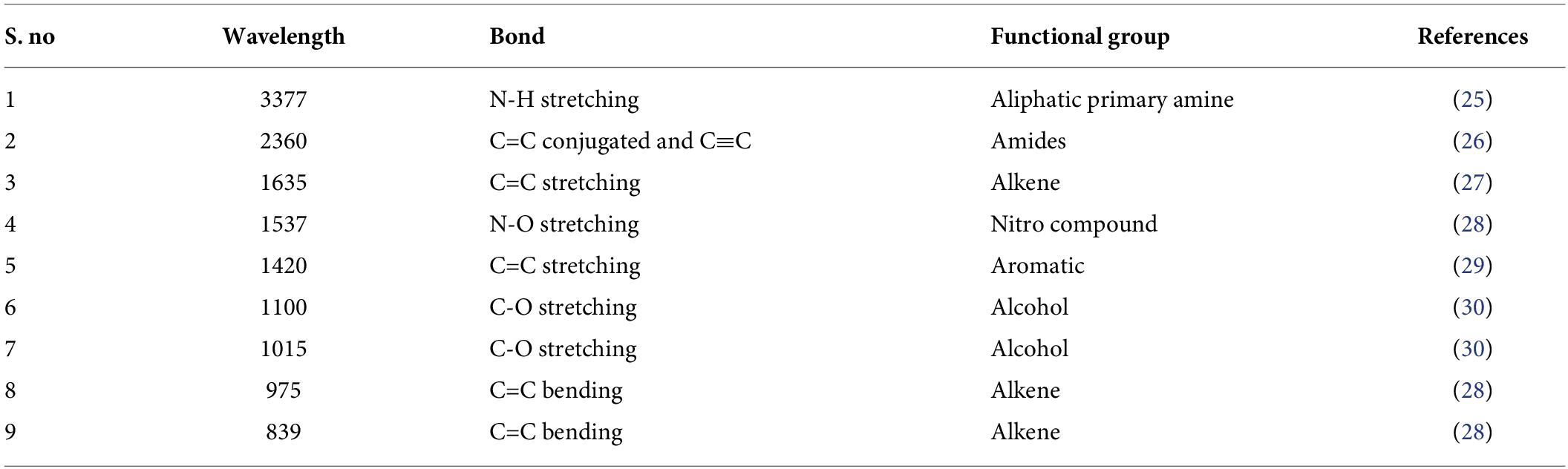
Table 1. Wavelength and functional group of ZnO NPs.
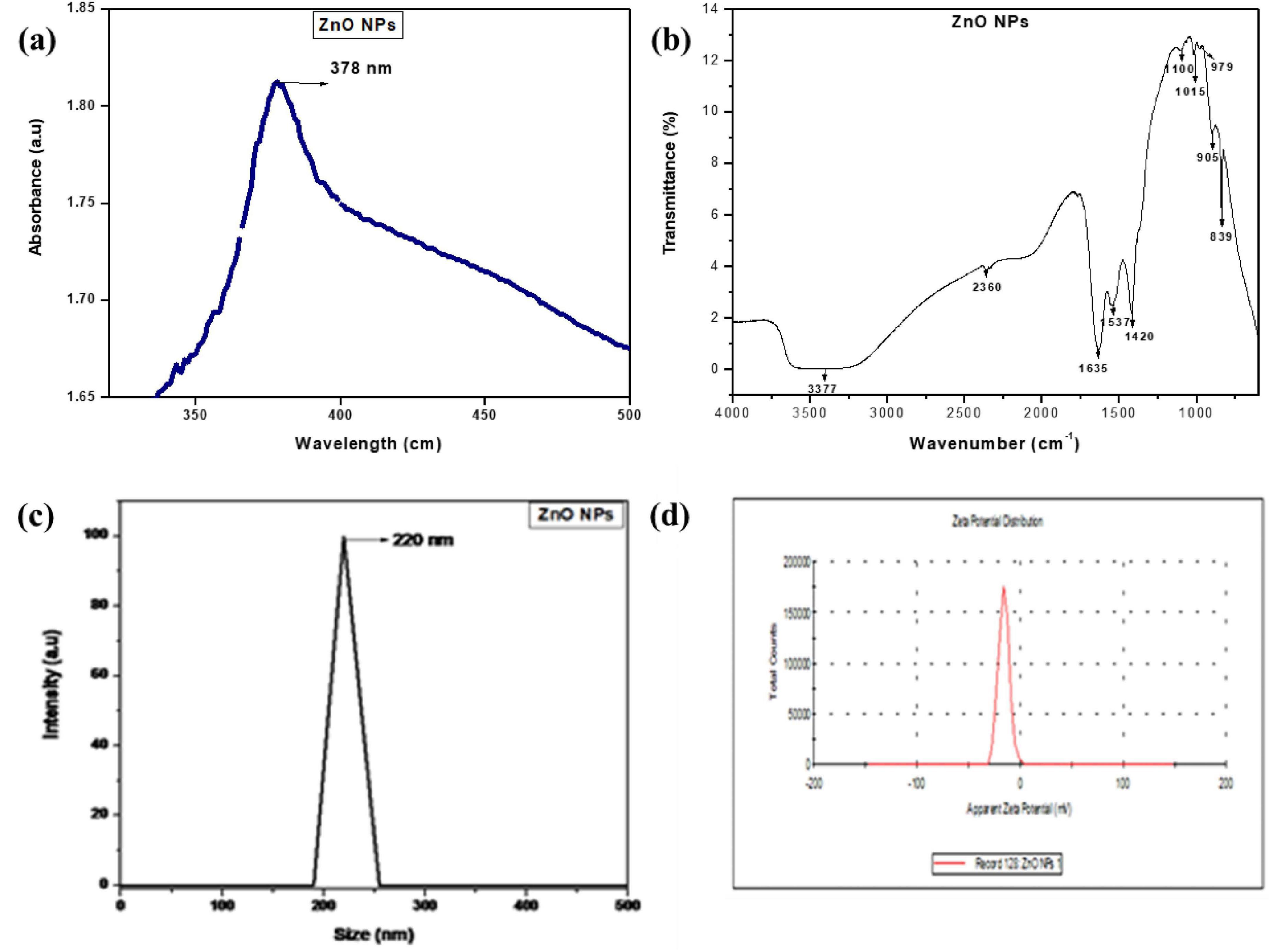
Figure 1. (a) UV-visible spectrum, (b) Fourier Transform Infrared Spectroscopy (FT-IR) spectrum, (c) size, and (d) charge of zinc oxide nanoparticles (ZnO NPs).
Antibacterial activity by colony counting method
Antibacterial activity of ZnO NPs, A. nilotica extract, and S. aromaticum extract
Antibacterial efficacy of ZnO NPs, A. nilotica extract, and S. aromaticum extract was assessed against two common oral pathogens, E. coli and S. aureus. The results demonstrated a concentration-dependent inhibitory effect for all tested agents and were mentioned in Table 2. ZnO NPs exhibited significant antibacterial activity against both bacterial strains, with complete inhibition of colony formation observed from 100 mg/ml down to 5 mg/ml for E. coli. Few colonies appearing at 1 mg/ml (13 ± 0.05 colonies), and a gradual increase was noted at lower concentrations (91 ± 0.02 and 130 ± 0.08 colonies at 0.5 and 0.1 mg/ml, respectively). In contrast, S. aureus showed higher susceptibility to ZnO NPs, with no visible colony growth up to 1 mg/ml. At 0.5 and 0.1 mg/ml, only 10 ± 0.03 and 35 ± 0.06 colonies were observed, respectively, indicating a more pronounced bactericidal effect on S. aureus.
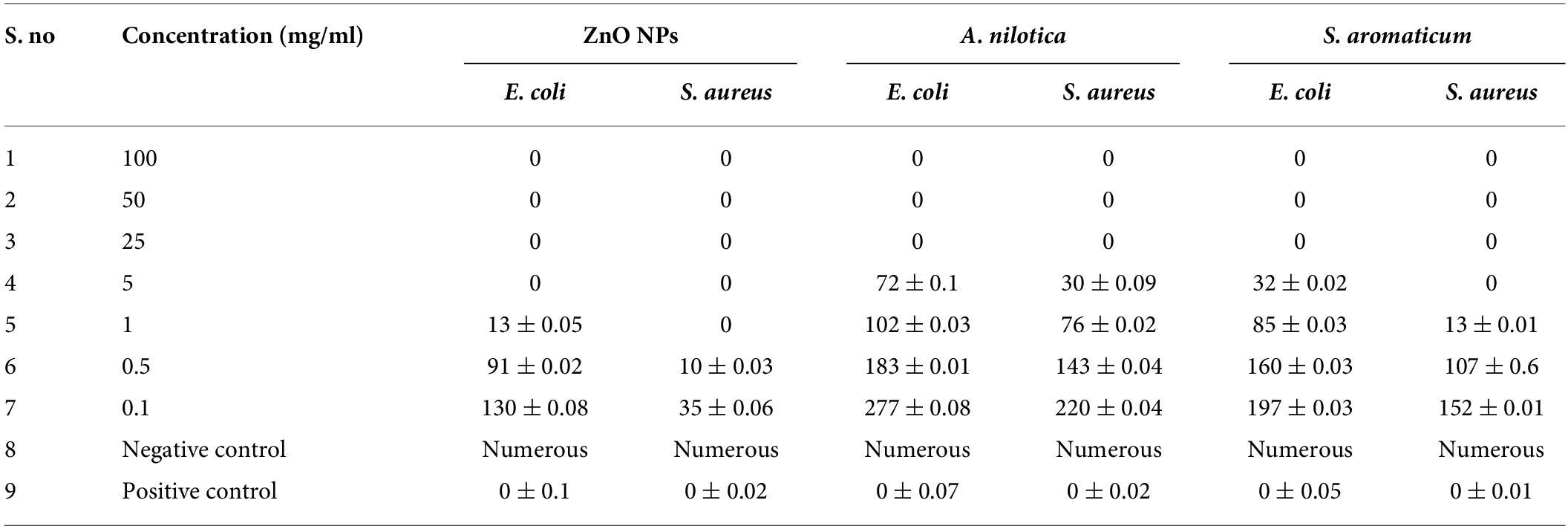
Table 2. Antibacterial activity of ZnO NPs, A. nilotica extract, and S. aromaticum against E. coli and S. aureus.
A. nilotica extracts are also showing better inhibitory effects against E. coli and S. aureus. Number of colonies was observed at 5 mg/ml (72 ± 0.1 colonies) against E. coli; bacterial colony growth was increased at lower concentrations. A similar flow was observed in S. aureus, but with some colonies at each concentration, offering better antibacterial efficacy against S. aureus. In the case of S. aromaticum extract, it shows better activity up to 25 mg/ml, with no bacterial growth observed for E. coli. The bacterial growth was observed at 5 mg/ml (32 ± 0.02 colonies) and increased with further dilution. For S. aureus, S. aromaticum extract inhibited growth up to 5 mg/ml and showed a more generous antibacterial effect than E. coli, especially at 1 and 0.5 mg/ml concentrations.
When compared with all the groups, untreated control samples have shown high bacterial colony growth against both the bacteria. The study resulted in ZnO NPs having the most potent antibacterial activity, followed by S. aromaticum extract and then A. nilotica, with all three agents showing better effectiveness against S. aureus than E. coli.
Synergistic antibacterial Activity of ZnO NPs in combination with A. nilotica extract and S. aromaticum extract
The antibacterial effects of ZnO NPs combined with A. nilotica and S. aromaticum extracts were assessed against E. coli and S. aureus, and the results are illustrated in Table 3. The combination of ZnO NPs and A. nilotica demonstrated significantly enhanced antibacterial activity, with complete inhibition of E. coli growth observed up to 5 mg/ml.
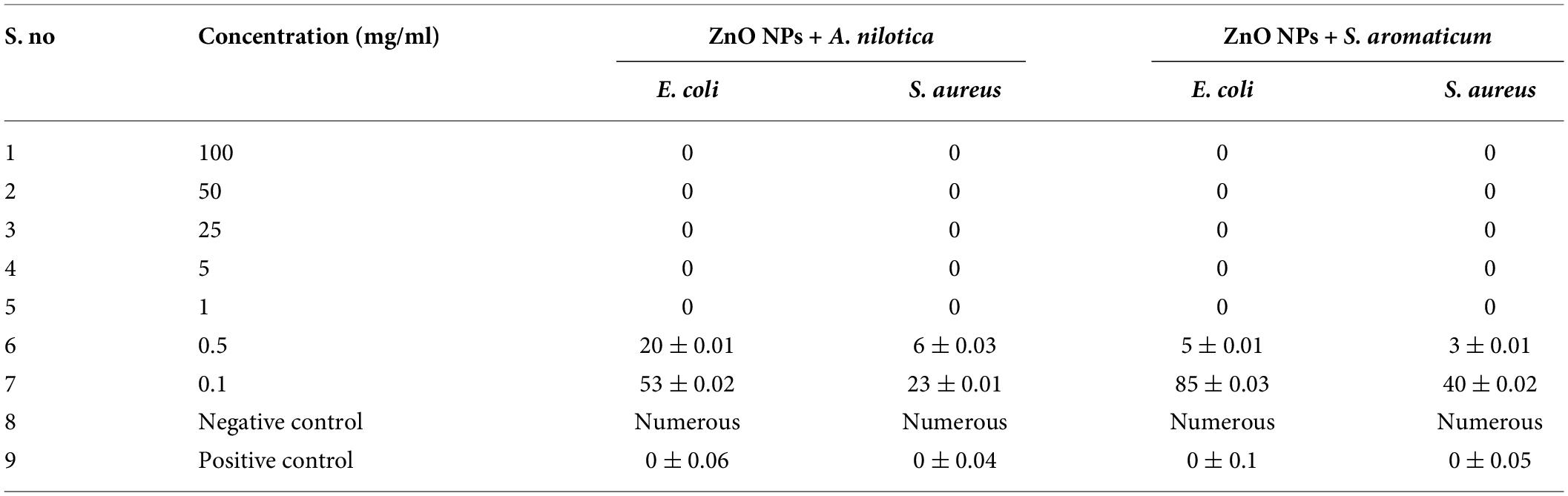
Table 3. Antibacterial activity of A. nilotica, S. aromaticum, and ZnO combination against E. coli and S. aureus.
Minimal bacterial growth was observed, with no colony formation up to 1 mg/ml, with a slight increase at lower concentrations (20 ± 0.01 colonies at 0.5 mg/ml and 53 ± 0.02 colonies at 0.1 mg/ml). A similar inhibitory effect was studied against S. aureus; in the concentration of 1 mg/ml, zero colonies were observed, and for 0.5 and 0.1 mg/ml, 6 ± 0.03 and 23 ± 0.01 colonies were observed, respectively. This indicates highly conclusive antibacterial activity in combinations against S. aureus and is consistent with trends observed in individual agent tests.
The combination of ZnO NPs with S. aromaticum extract showed a high bactericidal effect. The concentration of 1 mg/ml mentioned complete inhibition of E. coli. At the concentration of 0.5 mg/ml, 5 ± 0.01 colonies were observed, and for 0.1 mg/ml, 85 ± 0.03 colonies were observed. Similar results were noted against S. aureus, where total inhibition occurred at 1 mg/ml. At 0.5 mg/ml, colony formation of 3 ± 0.01 colonies was observed, and moderate growth of 40 ± 0.02 colonies was recorded at 0.1 mg/ml. These results indicate that both combinations generated nearly double the bactericidal effect compared to the individual agents used alone.
The improved antibacterial action may be explained by a synergistic relationship between ZnO NPs and the active phytochemicals present in A. nilotica and S. aromaticum. The nanoparticles may enhance the delivery and stability of plant-derived compounds, thereby promoting greater damage to bacterial cell membranes and interfering with essential cellular activities. The stronger effect observed against S. aureus could be related to its Gram-positive cell wall structure, which is generally more accessible to antimicrobial agents. The outer membrane of Gram-negative E. coli may limit the penetration of active compounds, resulting in reduced susceptibility at lower concentrations.
The untreated control groups showed the highest bacterial growth, confirming the significant antimicrobial efficacy of the combined treatments. Overall, these findings suggest that the integration of ZnO nanoparticles with medicinal plant extracts produces a strong synergistic antibacterial effect and may offer promising applications in the development of advanced antimicrobial and oral care formulations.
Conclusion
This study finds the bactericidal effects of ZnO NPs, plant extracts, and their combination against common oral pathogens. Different concentrations of ZnO NPs, S. aromaticum extract, A. nilotica extracts, and their combinations were studied against E. coli and S. aureus. At the concentration of 5 mg/ml complete inhibition of bacterial growth in ZnO NPs was observed. Plant extracts also attained complete reduction of E. coli and S. aureus up to 25 mg/ml concentration, representing a lesser antibacterial effect compared to ZnO NPs.
In the case of the combination of ZnO NPs with A. nilotica, the antibacterial activity was showed to be noticeably higher. The complete inhibition was observed at a low concentration of 1 mg/ml, and the related effect was observed for ZnO NPs with S. aromaticum combination, which also fully inhibited both pathogens at 1 mg/ml. These results highlight the valuable interaction of ZnO NPs and plant extracts, showing the combined formulation has a strong bactericidal effect against oral pathogens.
Such synergistic combinations have possible applications in the dental field, reducing plaque; controlling periodontal infections, including preventing dental caries; inhibiting biofilms; and aiding post-surgical healing. When the treatment of ZnO NPs is less effective alone, the combination with plant extracts helps to overcome bacterial resistance. Overall, the combination of ZnO NPs with plant extracts presents a promising and versatile approach for improving oral health and managing dental diseases.
Ethics committee/institute for this study
Not applicable
Ethics statement
Not applicable
Funding
The authors declare that no financial support was received for the research, authorship, and/or publication of this article.
Acknowledgment
The authors would like to thank Karpaga Vinayaga College of Engineering and Technology and Karpaga Vinayaga Institute of Medical Sciences and Research Center for providing facilities.
Conflict of interest
The authors declare that the research was conducted in the absence of any commercial or financial relationships that could be construed as a potential conflict of interest.
References
1. Bhandary R, Venugopalan G, Ramesh A, Tartaglia GM, Singhal I, Khijmatgar S. Microbial symphony: navigating the intricacies of the human oral microbiome and its impact on health. Microorganisms. (2024) 12(3):571.
2. Pandey N, Bodduluri S, Mathis S, Bodduluri H, Kumar A. Role of oral microbiota in preserving health and disease management. J Clin Immunol Microbiol. (2024) 5(2):1–7.
3. Salem SS, Elsayed HE, Shabana S, Khazaal MT, Moharram FA. Phytochemical profile and antimicrobial activity of essential oils from two Syzygium species against selected oral pathogens. BMC Complement Med Ther. (2023) 23(1):448.
4. Owusu-Boadi E, AkuokoEssuman M, Mensah G, AyambaAyimbissa E, Boye A. Antimicrobial activity against oral pathogens confirms the use of Musa paradisiaca fruit stalk in ethnodentistry. Evid Based Complement Altern Med. (2021) 2021:8663210.
5. Zeidan NK, Enany NM, Mohamed GG, Marzouk ES. The antibacterial effect of silver, zinc-oxide and combination of silver/zinc oxide nanoparticles coating of orthodontic brackets (an in vitro study). BMC Oral Health. (2022) 22(1):230.
6. Afrasiabi S, Chiniforush N, Barikani HR, Partoazar A, Goudarzi R. Nanostructures as targeted therapeutics for combating oral bacterial diseases. Biomedicines. (2021) 9(10):1435.
7. Shaba EY, Jacob JO, Tijani JO, Suleiman MA. A critical review of synthesis parameters affecting the properties of zinc oxide nanoparticle and its application in wastewater treatment. Appl Water Sci. (2021) 11(2):48.
8. Król A, Pomastowski P, Rafińska K, Railean-Plugaru V, Buszewski B. Zinc oxide nanoparticles: synthesis, antiseptic activity and toxicity mechanism. Adv Coll Inter Sci. (2017) 249:37–52.
9. Zhang S, Lin L, Huang X, Lu YG, Zheng DL, Feng Y. Antimicrobial properties of metal nanoparticles and their oxide materials and their applications in oral biology. J Nanomater. (2022) 2022:2063265.
10. Motelica L, Vasile BS, Ficai A, Surdu AV, Ficai D, Oprea OC , et al. Antibacterial activity of zinc oxide nanoparticles loaded with essential oils. Pharmaceutics. (2023) 15(10):2470.
11. Pushpalatha C, Suresh J, Gayathri VS, Sowmya SV, Augustine D, Alamoudi A , et al. Zinc oxide nanoparticles: a review on its applications in dentistry. Front Bioeng Biotechnol. (2022) 10:917990.
12. Nguyen NT, Nguyen LM, Nguyen TT, Nguyen TT, Nguyen DT, Tran TV. Formation, antimicrobial activity, and biomedical performance of plant-based nanoparticles: a review. Environ Chem Lett. (2022) 20(4):2531–71.
13. Tzimas K, Antoniadou M, Varzakas T, Voidarou C. Plant-derived compounds: a promising tool for dental caries prevention. Curr Issues Mol Biol. (2024) 46(6):5257–90.
14. Mitropoulou G, Stavropoulou E, Vaou N, Tsakris Z, Voidarou C, Tsiotsias A , et al. Insights into antimicrobial and anti-inflammatory applications of plant bioactive compounds. Microorganisms. (2023) 11(5):1156.
15. Abdellatif AO, Mohamed AA, Seed-Ahmed SS, Said MM, Mohamed NA, Mohammed KA , et al. Development of a pharmaceutical formulation containing clove (Syzygiumaromaticum) extract for the management of oral candidiasis. Saudi J Biomed Res. (2023) 8:160–5.
16. Byakod AS, Bhat PK. Antimicrobial efficacy of Acacia nilotica against microorganisms of oral cavity—an in vitro study. RGUHS J Dent Sci. (2023) 15(1):86–92.
17. Osman DA, Mustafa MA. Synthesis and characterization of zinc oxide nanoparticles using zinc acetate dihydrate and sodium hydroxide. J Nanosci Nanoeng. (2015) 1(4):248–51.
18. Agu MC, Omebere TF. Evaluation of antibacterial activities of clove bud oil and extract on bacterial isolates from dental caries. Glob Acad J Dent Oral Health. (2024) 6:57–71.
19. Sadiq MB, Tharaphan P, Chotivanich K, Tarning J, Anal AK. In vitro antioxidant and antimalarial activities of leaves, pods and bark extracts of Acacia nilotica (L.) Del. BMC Complement Alternat Med. (2017) 17(1):372.
20. Lu Z, Rong K, Li J, Yang H, Chen R. Size-dependent antibacterial activities of silver nanoparticles against oral anaerobic pathogenic bacteria. J Mater Sci Mater Med. (2013) 24:1465–71.
21. MuthuKathija M, Badhusha MS, Rama V. Green synthesis of zinc oxide nanoparticles using Pisonia Alba leaf extract and its antibacterial activity. Appl Surf Sci Adv. (2023) 15:100400.
22. Chikkanna MM, Neelagund SE, Rajashekarappa KK. Green synthesis of zinc oxide nanoparticles (ZnO NPs) and their biological activity. SN Appl Sci. (2019) 1(1):117.
23. Janaki AC, Sailatha E, Gunasekaran S. Synthesis, characteristics and antimicrobial activity of ZnO nanoparticles. Spectrochim Acta A Mol Biomol Spectrosc. (2015) 144:17–22.
24. Shamhari NM, Wee BS, Chin SF, Kok KY. Synthesis and characterization of zinc oxide nanoparticles with small particle size distribution. Acta Chimica Slovenica. (2018) 65(3):578–85.
25. de Oliveira Arnoldi Pellegrini V, de Jesus Bernardo A, Rossi BR, Leite RR, Possatto JF, Dabul AN , et al. Antimicrobial, photodegradation and BioReRAM applications of multifaceted green zinc oxide nanoparticles synthesized using coffee leaves extract. Sci Rep. (2025) 15(1):29054.
26. Gupta M, Tomar RS, Kaushik S, Mishra RK, Sharma D. Effective antimicrobial activity of green ZnO nano particles of Catharanthus roseus. Front Microbiol. (2018) 9:2030.
27. Bhandari K, Nautiyal N, Bhandari G, Dhasmana A, Gupta S, Gangola S , et al. A comparative investigation of ultrasonication and magnetic stirring methods for green synthesis of zinc oxide nanoparticles using Punica granatum peels. Sci Rep. (2025) 15(1):24869.
28. Nazir S, Zaka M, Adil M, Abbasi BH, Hano C. Synthesis, characterisation and bactericidal effect of ZnO nanoparticles via chemical and bio-assisted (Silybum marianum in vitro plantlets and callus extract) methods: a comparative study. IET Nanobiotechnol. (2018) 12(5):604–8.
29. Patil SP, Shaikh AM, Baviskar RR, Mavlankar GR, Bhatu MN. Natural products assisted synthesis of CuO and ZnO nanoparticles for the catalytic degradation of methylene blue dye for longer period. J Emerg Technol Innov Res. (2022) 9(10):c373–87.
30. Ramimoghadam D, Hussein MZ, Taufiq-Yap YH. Synthesis and characterization of ZnO nanostructures using palm olein as biotemplate. Chem Central J. (2013) 7(1):71.
© The Author(s). 2026 Open Access This article is distributed under the terms of the Creative Commons Attribution 4.0 International License (https://creativecommons.org/licenses/by/4.0/), which permits unrestricted use, distribution, and reproduction in any medium, provided you give appropriate credit to the original author(s) and the source, provide a link to the Creative Commons license, and indicate if changes were made.